

List Segmentation
Segmenting your email lists can work wonders for automation. There are so many ways to break up your lists – by industry, age, location, new and returning customers and the list goes on. These lists can be used to create automations or to funnel into automations. If you need help creating some killer automations to move your leads through your sales funnel, let our email marketing experts build your campaign! You can have a new customers automation, a returning customers automation or an automation for customers who have not made a purchase in a certain amount of days. However you want to segment your lists, there should always be a strategy in place.
Bounce Rate
A bounce rate in the email marketing world is the percentage of emails that were not delivered in your campaign. If your bounce rate is high, there might be as issue with your email or the domain that you are sending from so make sure you are always checking your bounce rate whenever you send out an email.
There are two types of bounces, a hard bounce and a soft bounce – two very important marketing terms that you need to know in order to run successful email campaigns.
Hard Bounce
In your email campaigns you will undoubtedly see bounces. Hard bounces are emails that were not delivered. There are essentially two reasons for this. The email could be wrong so if you do have a small subscriber list, check to make sure your email address are correct or you have been blocked. This is why it is so important to build your email list organically. This means that you have gathered emails from people and have their explicit permission to send them emails. Do not buy email lists. This can really hurt you in the long run – if enough people block or report you as spam your deliverability will plummet.
Soft Bounce
A soft bounce means that your email was delivered but bounced back because the users inbox was full, their email server was down at the time of delivery or maybe the email was too large. Some email APIs will continue to attempt to deliver to these emails several more times before they give up. If the soft bounces continue, eventually the API will remove the email address from your subscriber list.
Open Rate vs Total Opens
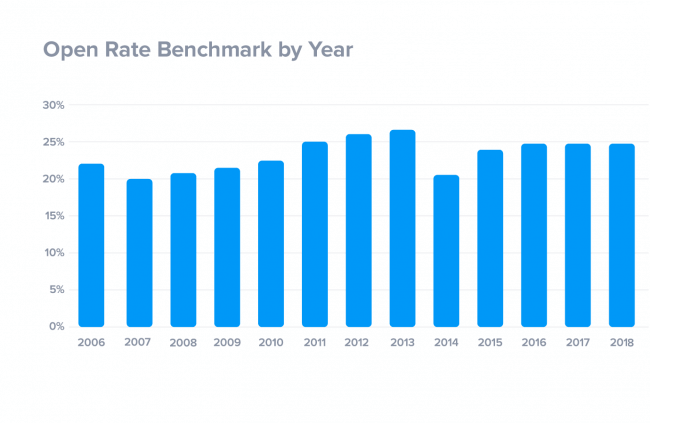
Some email platforms will show you an open rate as well as the number of total opens. It is important to know the difference between these two email marketing terms. Your email open rate tells you how many users opened your email. Sometimes people will go back and open the same email two or three times, especially if there is a coupon or special offer associated with it. Total opens accounts for every time your email has been opened.
CTR – Click Through Rate
While open rates look great on paper the click-through rate is the metric you should be most concerned with. The goal of most email campaigns is to keep email subscribers engaged and keep them coming back to your site. Engagement can be measured by the open rate and click-through rate measures how often they go to your site, or how often they click through. These metrics work together because without people opening your email there’s no way they can click through to your site
If you can comprehend these marketing terms, you are ready to take the next step in growing your business. If you still have some questions about these marketing terms contact the professionals at DIGILAB MARKETING AGENCY. We can help you build your social media strategy, run advertisements, manage email campaigns and even build you a new website!